
Most screen-free lists fail at the same point: they assume you have energy, materials and a plan. On the Saturday morning when you actually need one, you have none of the three.
So this list is organized the way the decision really gets made — by how much time you have, what the weather is doing, and how much is left in you. Nothing here needs a trip to a craft shop.
One thing worth saying first: screen-free does not have to mean the whole weekend. An afternoon counts. A household that manages four screen-free hours on a Saturday is doing better than one that attempts a heroic two-day ban and abandons it by ten past nine.
Fifteen minutes, no preparation
For the gap between one thing and the next, when the alternative is handing over a phone.
- The yes/no game. One person thinks of an object in the room; everyone else gets twenty questions. Endlessly repeatable, needs nothing.
- Build the tallest thing from what is on the table. Books, cushions, spaghetti, whatever is there. Timed, three minutes.
- Sock-pair race. Genuinely useful, genuinely competitive, and the laundry gets done.
- Draw the other person without looking at the paper. The results are reliably funny and nobody can be bad at it.
- Two truths and a lie, family edition. Works far better with people who already know each other than with strangers.
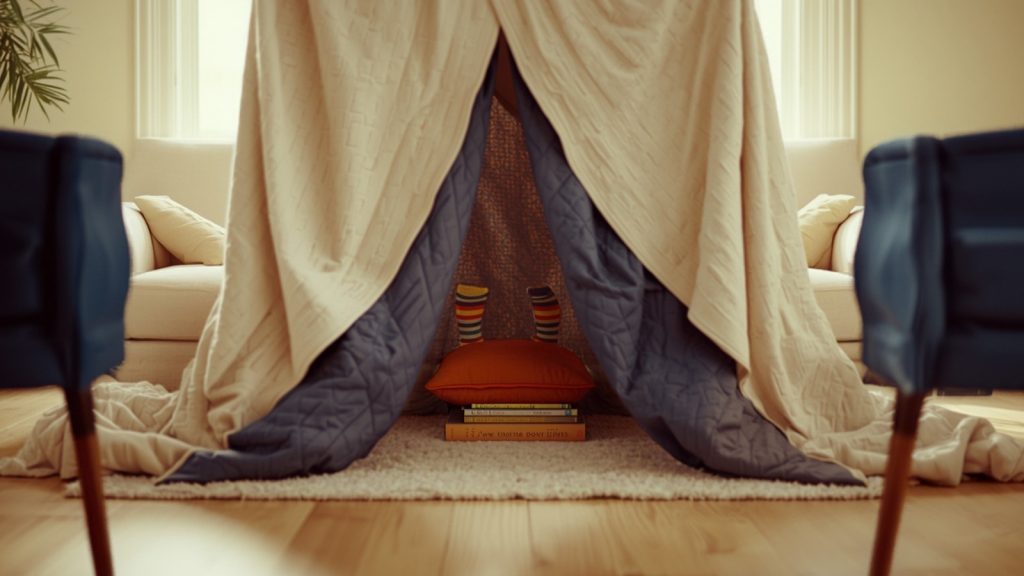
An afternoon indoors, because it is raining
- Build a den and eat lunch in it. The building is most of the entertainment, and the eating-in-it is what makes it memorable rather than just tidy-up-later.
- The $5 kitchen challenge. Everyone invents something from what is in the cupboard. It does not need to be good.
- Family newspaper. One sheet of A4, everyone writes one article about the week. Utterly absorbing, and the ones from three years ago are the best thing you will ever find in a drawer.
- Photograph the house as if selling it — then as if it were haunted. The second round is the point.
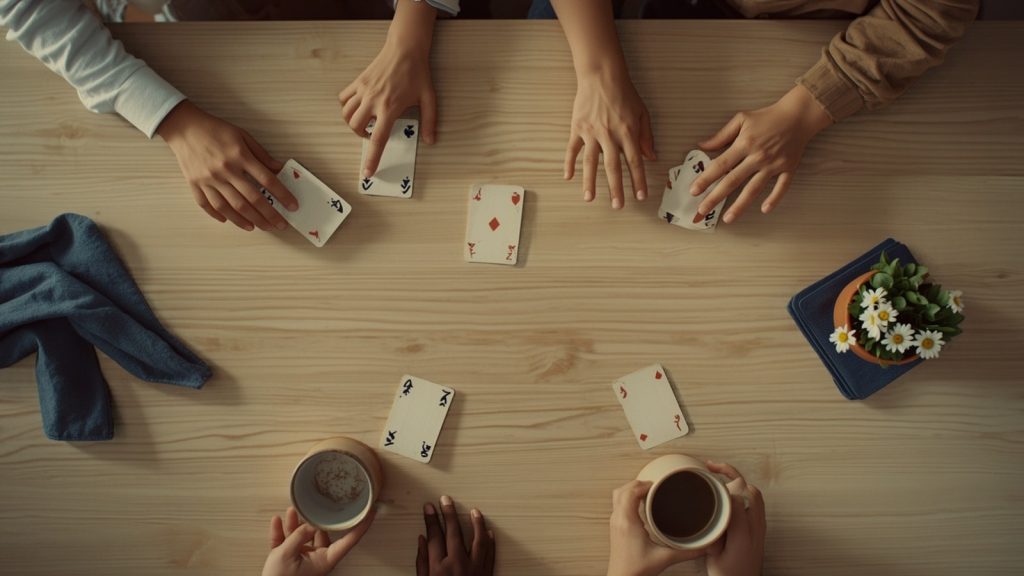
- Learn one card game properly. Rummy, Cheat, Whist. One evening, then it lasts for years.
- Jigsaw on a tray, left out. Nobody has to commit; people drift past and add pieces.
- Bake the thing that needs waiting. Bread, if you have flour. The waiting is a feature, not a problem.

Outdoors, no destination, no entry fee
- The coin walk. Flip at every junction — heads left, tails right. You will end up somewhere you have never been within twenty minutes of your own house.
- Photo scavenger hunt. Ten things to find: something red, something older than you, something with exactly four of something. One phone, used as a camera, counts as screen-free by most people’s definition.
- The same spot, every season. Same tree, same bench, one photo. This is a four-year project disguised as a walk.
- Puddle engineering. Dams, channels, redirected water. Ruins clothes, worth it.
- Pick up ten pieces of litter on a walk. Turns an aimless trudge into a thing with a finish line.
- Cook something outside — even sausages on a disposable barbecue in November. Weather makes it better, not worse.
When there is nothing left in you
The category no list includes, and the one most weekends actually need. Doing nothing together is not a failure of parenting.
- Audiobook and a jigsaw. Everyone in the same room, nobody performing.
- Reading in a heap. Blanket, sofa, everyone with their own book.
- Cook one thing slowly while the radio is on.
- The twenty-minute tidy, everyone, timer on, then stop when it goes off whatever state the room is in.
- Nap. Genuinely. A tired household is not fixed by an activity.
What makes it stick
The households that manage this regularly tend to do three unglamorous things.
| What they do | Why it works |
|---|---|
| Name a window, not a ban | “Saturday until lunch” is a rule people can keep. “No screens this weekend” collapses at the first hard moment. |
| Decide the night before | Saturday morning is the worst possible time to invent a plan. |
| Put the adults’ phones away too | The single biggest predictor of whether it works. Children notice instantly. |
| Keep one box ready | Cards, paper, tape, a ball. The friction of finding things is what kills the idea. |
| Let it be boring for ten minutes | Boredom is the bit immediately before someone invents something. Rescuing them from it ends the process. |
The honest bit
None of this is a moral position about screens. Everyone in most households, adults included, spends more time on a screen than they would choose to, and a Saturday morning of den-building does not offset a week.
What it does do is create a few hours where the default is not automatic — where someone has to decide what happens next. That is the whole value, and it is worth having even when the activity itself is nothing more than five people reading in the same room.
Pick one from the fifteen-minute list this week. It is the only category that survives contact with a normal Saturday.
More in Family Time, or see how weekends fit the wider household system in The Family Life OS.